
You might get upset if you buy concrete mixers and do not see better work or quality. Many experts see buyers make mistakes like only thinking about price. Some people pick the wrong mixer for the concrete type. Others do not think about how much they will need later. To get more work done and mix better, you must pick the right mixer. You should also measure the parts carefully and use the right speed. Top companies like cnbuildmachinery have seen these problems everywhere. They give answers that follow the best ways to work. Think about how you buy things and listen to tips that help you choose better.
Key Takeaways
- Pick the right size mixer for your job. This helps you save time and materials. The correct size mixer makes work faster and better.
- Choose the mixer type that fits your concrete needs. Drum mixers can do many jobs. Tilting mixers mix faster and better.
- Make sure your mixer’s power source fits your work site. Electric mixers are good if you have steady power. Diesel or gasoline mixers are best for faraway places.
- Buy strong mixers to save money later. Good mixers need less fixing and work well for a long time.
- Put safety first when picking a mixer. Safety features keep your team safe and help work go smoothly.
Capacity Mismatch in Concrete Mixers
Project Size and Mixer Selection
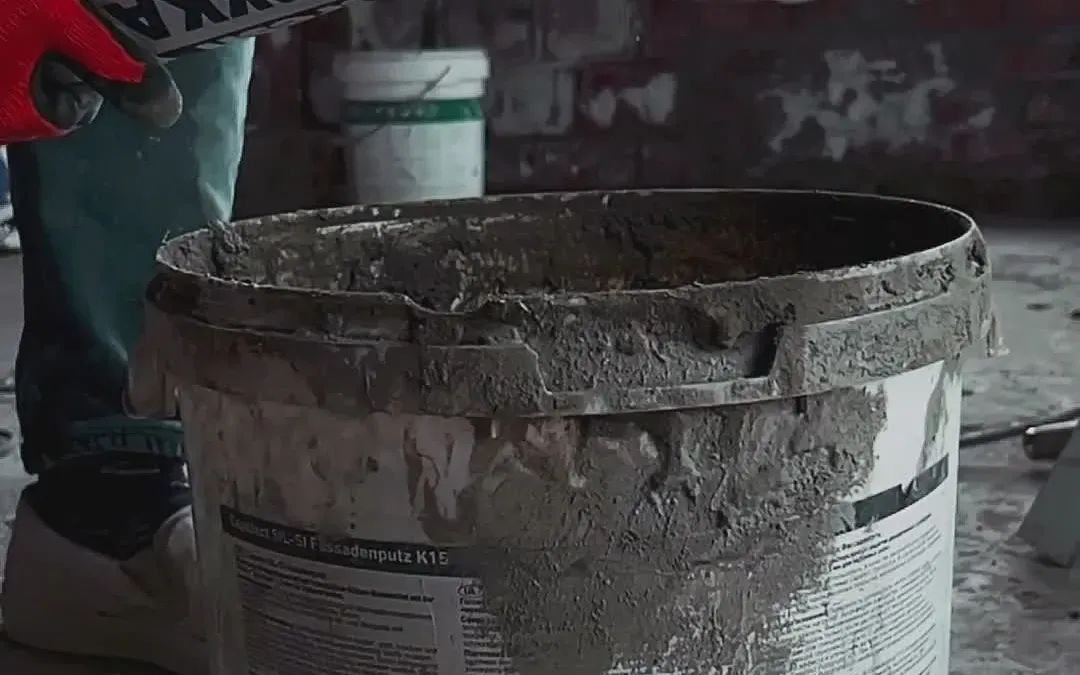
You must pick a concrete mixer that matches your project size. If your mixer is too small, you will need to mix many batches. This takes more time and work. If your mixer is too big, you will waste concrete and use extra energy. Many people buy mixers because they are cheap or because they hope for bigger jobs later. They do not think about what they need right now. You should look at your project and figure out how much concrete you need each day.
Here is a simple table to help you pick the right mixer for your project:
| Mixer Category (Nominal Size) | Approximate Yield (Usable Concrete) | Ideal Project Applications |
|---|---|---|
| Small Batch (2, 4 cu. ft.) | 1.5, 3 cu. ft. (1-2 wheelbarrows) | Fence posts, small patching, mortar, garden pathways |
| Mid-Sized Residential (5, 9 cu. ft.) | 3.25, 6 cu. ft. (3-5 wheelbarrows) | Driveways, garage floors, patios, retaining walls |
| Commercial/Large Scale (10+ cu. ft.) | 6.5 cu. ft. and up (6+ wheelbarrows) | Large slabs, multi-story foundations, highway repair |
cnbuildmachinery sells drum mixers from 180L to 750L. They also have tilting mixers from 350L to 700L. You can find a mixer that fits your project, whether it is small or very big.
Risks of Over- or Under-Sizing
You will have problems if you use the wrong size mixer. If you put too much in the mixer, it can break and not mix well. If your mixer is too small, you will need more time and work. This makes you less productive.
Overloading the Mixer: If you put too much in the Concrete Mixer, it will not mix well and can break. Always follow the rules from the company about how much to put in.
Common mistakes are:
- You buy a mixer just because it is cheap, not because it fits your needs.
- You pick a mixer that is too big for your job.
- You choose a mixer that is too small for your work.
- You do not know the difference between dry volume and usable batch yield.
- You pick a drum size because you dream of big jobs, not because you need it now.
You should always check the mixer size and see if it matches your daily needs. If you use the right size mixer, you save time and materials. You also keep your mixer safe and get more work done.
Choosing the Wrong Mixer Type
Drum vs. Tilting Concrete Mixers
It is important to know how drum mixers and tilting drum mixers are different. Drum mixers can mix many kinds of materials. People use them for lots of jobs in different places. Tilting drum mixers are made for mixing concrete. They let you pour out the concrete fast by tipping the drum. This helps you save time and keeps your work going.
Here is a table that shows the main differences:
| Feature | Drum Mixers | Tilting Drum Mixers |
|---|---|---|
| Primary Use | Aggressive mixing of various materials | Specifically designed for concrete mixing |
| Discharge Mechanism | Standard discharge methods | Efficient discharge through tilting |
| Application Areas | General mixing in various industries | Construction, precast, and infrastructure projects |
| Mixing Efficiency | High for diverse materials | High-speed mixing with rapid batching capabilities |
| Aggregate Handling | Handles large aggregates efficiently | Engineered to lift, turn, and tumble aggregates |
You can buy both types from cnbuildmachinery. The company sells drum mixers for small jobs. They also have tilting drum mixers for bigger work. You can pick the mixer that fits your project.
Matching Mixer Type to Concrete Needs
You need to pick the right mixer for your job. If you use the wrong one, your concrete might not turn out well. Drum mixers are simple and do not cost much. They work for most jobs but may not mix everything the same way. Tilting drum mixers mix faster and make better batches. They are good for building sites and making concrete parts.
There are other mixer types too, but you should think about what your project needs. Here is a table that shows how each mixer type changes the way concrete is mixed:
| Mixer Type | Advantages | Disadvantages |
|---|---|---|
| Drum Mixer | Easy to operate; affordable and widely available; suitable for most projects | Limited to smaller volumes; may not produce highly uniform mixtures |
| Pan Mixer | High mixing consistency; suitable for precast concrete; versatile for various applications | More expensive than drum mixers; requires regular maintenance |
| Twin-shaft Mixer | Fast mixing time; high mixing uniformity; ideal for large-scale projects | Expensive equipment; high power consumption and maintenance required |
| Continuous Mixer | Efficient for large-scale projects; continuous concrete supply; suitable for remote areas | Less flexibility in mix design; requires skilled operation |
| Volumetric Mixer | On-site mixing; reduces waste; allows flexible mix design | High initial cost; requires skilled operator to adjust mix proportions |
| Concrete Mixer Truck | Easy transportation; keeps concrete fresh during transit; suitable for most construction sites | Depends on batching plant; limited capacity per trip |
Tip: Always look at what your project needs before you buy a mixer. If you want to work faster, pick a mixer that matches your job and your concrete.
cnbuildmachinery has many choices. You can get drum mixers, tilting drum mixers, and hand-pushed mixers. Each one helps you finish your work faster and get better concrete.
Power Source Compatibility Issues
Site Power and Mixer Performance
You need to check the power source at your job site before you choose concrete mixers. If you pick the wrong type, you may face delays or lose time. Some sites have steady electricity. Others do not. When you use an electric mixer in a place without power, you cannot work. Diesel and gasoline mixers work anywhere, but they can be noisy and need fuel.
Tip: Always ask yourself if your site has stable power. If not, you should look for mixers that run on diesel or gasoline.
Here are some ways the power source affects your work:
- Diesel engines last long and handle tough jobs. They work well in remote areas and heavy-duty projects.
- Electric engines save money and run quietly. They are best for cities with steady electricity.
- Diesel mixers give you freedom from power lines. Electric mixers cost less to maintain and make less noise.
- Diesel-powered mixers fit off-grid sites and big jobs like mining or road work.
- Electric mixers help in cities with strict rules about pollution and noise.
If you use the wrong mixer, you may stop work or waste time. This lowers your productivity and makes your project harder.
Selecting the Right Power Option
You must match your mixer to your site. cnbuildmachinery offers many choices for mixing concrete. You can pick:
- Drum-mixer for small to medium jobs.
- Hand-pushed-mixer for tight spaces and repairs.
- Tilting Concrete Mixer with diesel, gasoline, or electric power for bigger batches.
- Portable Drum Mixer for light jobs using household power.
- Towable Cement Mixer for contractors needing large capacity.
- Volumetric Mixer for big commercial projects, mixing dry ingredients on-site.
You can find a mixer that fits your site and your needs. If you choose the right power source, you keep your work moving and avoid downtime. This helps you finish mixing concrete faster and keeps your project on track.
Neglecting Durability and Maintenance
Long-Term Costs of Poor Quality
You may think buying a cheap concrete mixer saves money. But cheap mixers can cost more later. Mixers made with weak materials break down more often. When your mixer breaks, you cannot work as fast. You might also get concrete that does not mix well. This can make your finished work look bad.
To make your mixer last longer, you need to take care of it. Simple drum mixers only need basic cleaning and oiling. Bigger machines need special care and new parts sometimes. Here are some steps you should follow:
- Clean the drum and blades after each use so concrete does not get hard inside.
- Put oil on moving parts like bearings and gears to keep them working well.
- Check the motor to see if it gets hot or makes weird sounds.
- Look at drive belts or chains to see if they are tight or broken.
- Change old parts, like blades and seals, before they break and cause more trouble.
Note: Check your mixer every day to find problems early. Oil all moving parts as the company says, usually every 50 hours. Clean the drum after you use it so concrete does not build up.
Durable Mixers from cnbuildmachinery
You can stop many problems by picking mixers made for hard jobs. cnbuildmachinery makes mixers that last a long time. These mixers use strong stainless steel and carbon steel. The tough materials do not rust or break easily, even outside. The mixers have fewer moving parts, so they do not wear out fast.
Here are some things you get with cnbuildmachinery mixers:
- Strong build with heavy steel so they last longer.
- Materials that do not rust, even in wet places.
- Simple design so you can fix them quickly and easily.
- You do not need to fix them often, so you can work more.
When you buy a strong mixer, you keep your work good and on time. You also save money because you do not need many repairs. Picking the right mixer helps you do your best work and keeps your team busy.
Overlooking Portability and Access
Mobility on Challenging Sites
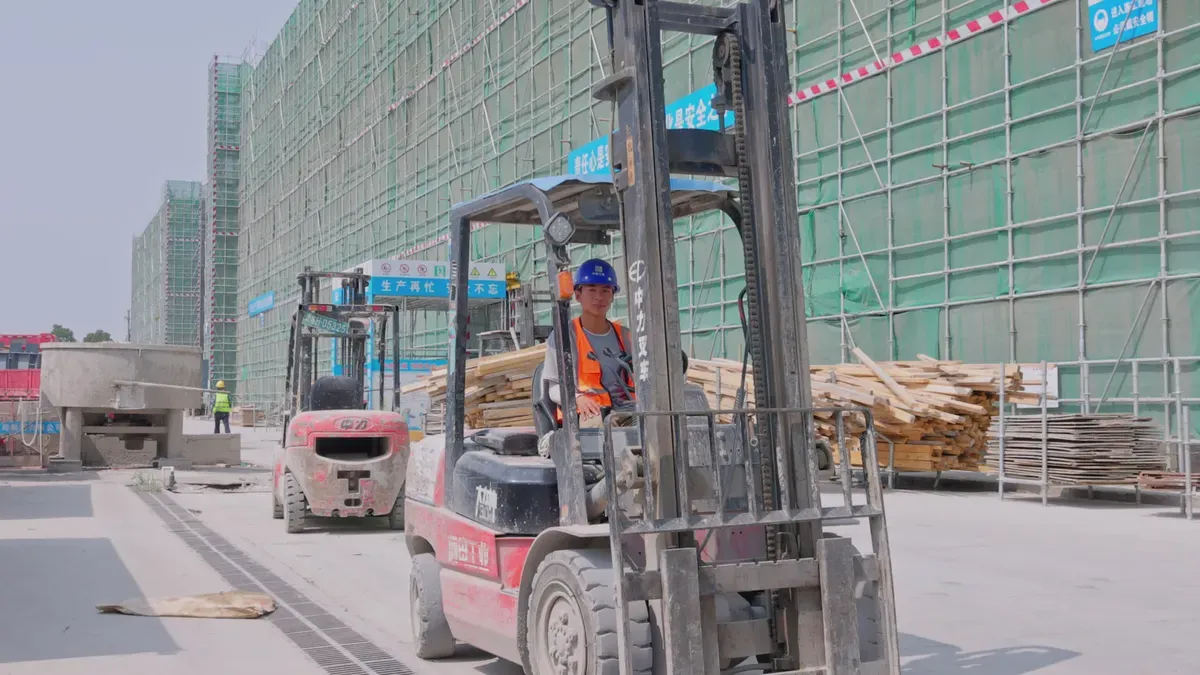
You may not realize how much time you lose when your concrete mixers cannot move easily. If you work on a site with narrow paths, steep slopes, or crowded spaces, a heavy or fixed mixer can slow you down. You might need to carry materials by hand or wait for the mixer to be moved. This wastes energy and makes your team less productive.
- Portable mixers help you work in tight spaces and on rough ground.
- You can keep your project on schedule because you do not have to wait for equipment to arrive.
- The small size and easy movement of mobile concrete mixers make them perfect for city jobs and rural projects.
- In cities or old buildings, you often find small entrances or stairs. Portable mixers solve these problems.
- You do not need to lift heavy buckets as much, which keeps your team safe and speeds up the job.
Tip: When you choose mobile concrete mixers, you reduce delays and make your work easier, even in hard-to-reach places.
Hand-Pushed and Mobile Mixers
You can boost your productivity by using mobile concrete mixers that fit your site. These mixers move where you need them. They mix and pour concrete right at the spot, so you do not waste time or effort. Mobile concrete mixers work well for both big and small projects. They help you finish jobs faster and with less trouble.
cnbuildmachinery offers a hand-pushed-mixer that gives you true mobility. The drum is strong and does not rust. The wheels roll over rough ground without problems. You can use this mixer for fixing patios or working on busy construction sites. The compact design lets you move it easily, even in tight corners. The one-touch start makes it simple for anyone to use. You can mix mortar or concrete in small spaces without stress.
When you pick the right mobile concrete mixers, you make your work smoother and safer. You also save time and keep your project moving forward.
Ignoring Safety Features in Concrete Mixers
Safety Risks and Productivity Loss
If you do not pay attention to safety features, your team can get hurt. Missing guards or warning signs can cause accidents. These accidents make your work slow and less productive. People can fall or get injured while cleaning. Someone might get caught in moving parts. The table below shows the most common accidents when mixers do not have safety features:
| Type of Incident | Percentage of Cases |
|---|---|
| Falls | 31.0% |
| Struck by falling objects | 26.8% |
| Caught in or between objects | 16.9% |
| Injuries during cleaning operations | 37.5% |
| Injuries during transportation | 18.8% |
| Injuries during maintenance/repair | 18.8% |
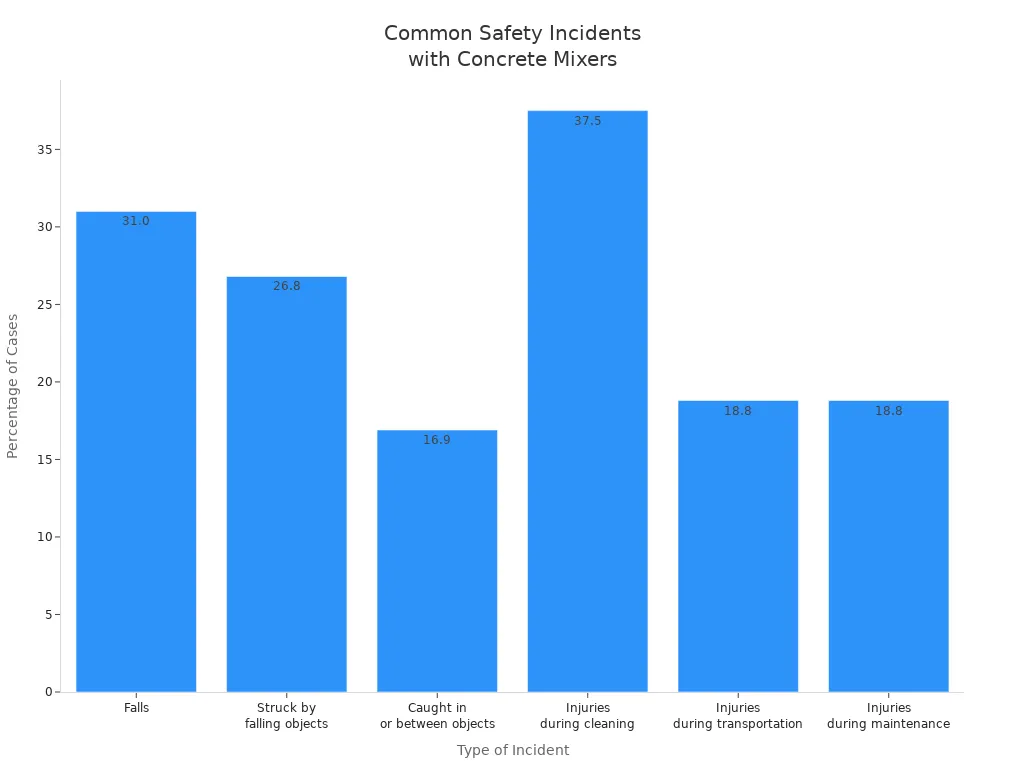
If you use mixers without safety features, you may see more accidents. This can stop your project and cost you money.
Essential Safety Features
You can stop many accidents by picking mixers with good safety features. These features keep workers safe and help your project stay on track. Here are some important safety features:
| Safety Feature | Description |
|---|---|
| Visibility systems | Helps you see better on busy or tight job sites. |
| In-cab concrete placement technology | Gives you more control and lowers accident risk. |
| Protective guards | Stops you from reaching into moving parts. |
| Elevated platforms with guardrails | Lets you work safely on higher parts of the mixer. |
| Safety locks | Makes sure the mixer cannot run during maintenance. |
| Warning signs | Reminds you not to work on the mixer while it is moving. |
| Automatic mixer stop catches | Stops the mixer if a hatch is open. |
| Security grids | Blocks access to moving parts through windows. |
| Protection covers | Covers all moving parts to keep you safe. |
You should also follow good safety habits. Use lockout/tagout steps when fixing the mixer. Wear the right PPE. Make sure there is good airflow if you work inside. Train your team about dangers and safe ways to work.
cnbuildmachinery makes mixers with safety in mind. You get easy controls and strong guards that protect you. Features like flange bearing guards, flat barriers, and lockable ladder guards keep you safe from moving parts. These safety designs help you avoid accidents and keep your work going strong.
After-Sales Support Neglect
Impact on Productivity
You might not think about after-sales support when you buy concrete mixers. If you ignore this, you can face many problems later. Poor support means you wait longer for repairs. Your mixer sits unused, and your team cannot work. This lowers your productivity and can cost you money.
Here are some ways weak after-sales support can hurt your work:
- You lose time when you wait for help or spare parts.
- Repair costs go up if you cannot get expert service quickly.
- Your concrete mixers may break down more often, making your work less reliable.
- Local technicians may not know how to fix complex machines, which can make problems worse.
- If you use mixers from different places, you might get slow or confusing support.
Note: Many people expect help within a few hours when something breaks. Delays can stop your whole project.
cnbuildmachinery’s Customer Support
You can avoid these problems by choosing a company with strong support. cnbuildmachinery gives you help wherever you work. You get a full year warranty, and you can ask for more coverage if you need it. You can reach support by phone, email, or online chat. The team answers fast and ships spare parts quickly, no matter where you are.
Here is what you get with cnbuildmachinery:
- A support network that covers many countries and regions.
- Fast answers and quick delivery of parts to keep your concrete mixers running.
- Training and expert help from the start of your project to the end.
- Service that meets industry standards, with most problems fixed on the first visit.
You do not have to worry about long waits or lost time. With cnbuildmachinery, you keep your equipment working and your project moving forward.
You can save time and get better work if you avoid seven common mistakes when buying concrete mixers. Picking the right machine helps you work faster and do a better job. Make a checklist to compare how often you need service, how long parts last, and what support you get.
- The checklist lets you see real costs for taking care of the mixer and helps you compare different brands with facts.
- It also shows which company gives better help and lower costs over time.
You make better choices when you ask experts and read what others say.
- People who work in the industry and skilled workers give tips to help you choose the best mixer.
- Advice from cnbuildmachinery helps you find equipment you can trust.
Look at your current machines and plan smart changes for your next jobs.
FAQ
What size concrete mixer should you choose for your project?
You should match the mixer size to your daily concrete needs. Small jobs need a 180L or 250L mixer. Large projects work better with 500L or 750L models. Always check your project’s requirements before you buy.
How often should you clean your concrete mixer?
You should clean the drum and blades after every use. This prevents concrete from hardening inside. Regular cleaning keeps your mixer working well and helps it last longer.
Can you use a concrete mixer without electricity on-site?
Yes, you can. Choose a diesel or gasoline-powered mixer if your site does not have electricity. These mixers work well in remote areas and keep your project moving.
What safety features should you look for in a concrete mixer?
Look for mixers with guards, safety locks, and warning signs. These features protect you from moving parts and help prevent accidents on the job site.
Does cnbuildmachinery offer support after you buy a mixer?
Yes. cnbuildmachinery provides global customer support, fast spare parts delivery, and expert help. You can contact their team by phone, email, or online chat for assistance.