
Choosing the wrong mixer can cost you thousands in delays and wasted materials. The global concrete mixer market reaches USD 5.17 billion in 2026, growing at 6.7% annually—yet many contractors still struggle with equipment selection.
Picture this: you’re switching between small residential pours and larger commercial slabs. One mixer size won’t serve both efficiently. How do you select the right cement mixer for your construction projects? This buying guide breaks down the decision into manageable factors: mixer types, capacity, power source, portability, and long-term value.
Understanding your project requirements is the first step. Your construction project’s scale determines capacity needs. Power options—electric, diesel, or gasoline—depend on site conditions. These buying tips help you match equipment to actual demands, not guesswork. Proper equipment selection ensures your concrete meets specifications every time. Consider your construction timeline and material requirements before committing to any mixer.
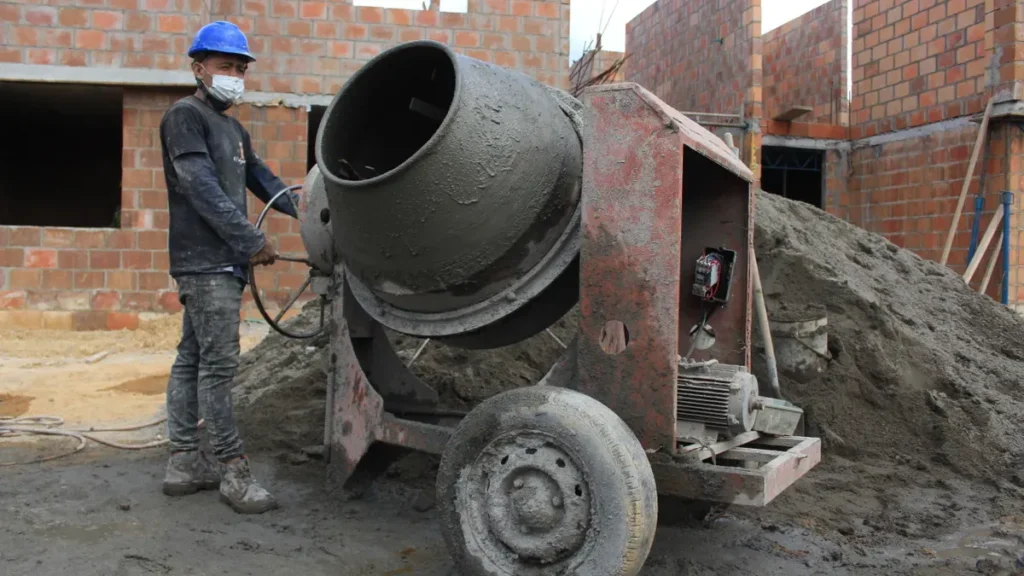
Key Takeaways
- Match mixer type to your project: drum mixers for standard pours, twin-shaft for high-strength concrete, and tilting mixers for versatility.
- Calculate your batch needs: divide total concrete volume by mixer output, then add a 20-30% buffer for delays and spillage.
- Choose power source based on site: electric for urban noise restrictions, diesel for remote areas, and gasoline for high mobility.
- Prioritize durability and maintenance: regular cleaning and lubrication extend mixer life and protect your investment.
- Consider total cost of ownership: factor in maintenance, fuel, and resale value, not just the purchase price.
Types of Cement Mixers for Contractor Selection
Your equipment selection starts with understanding the three primary concrete mixer types available in 2026. Each design serves different project scales and performance requirements.
Drum, Pan, and Twin-Shaft Mixers Explained
Drum mixers remain the workhorse for standard pours. They rotate at 12–18 RPM and handle batch sizes from 6 to 11 cubic meters. A typical cycle takes 6–8 minutes. These machines cost between $220,000 and $320,000, with blade replacement needed every 18–36 months. Drum mixers suit projects where slump loss of 20–40 mm over 60 minutes is acceptable. They struggle with low water-cement ratios below 0.35.
Twin-shaft pan mixers deliver superior performance for demanding specifications. They operate at 25–35 RPM with cycle times of just 30–60 seconds. Batch sizes range from 1 to 6 cubic meters. These mixers handle low water-cement ratios down to 0.28, making them ideal for high-strength concrete. Capital costs run $80,000–$250,000, though blades need replacement every 6–18 months. The faster cycle time means you can produce more batches per hour.
The 90-minute placement rule from ASTM C94 historically required discharge within 90 minutes of mixing. Recent revisions allow purchasers and producers to agree on extended time limits. Modern admixtures can maintain workability beyond 90 minutes. This flexibility lets you choose larger mixing equipment without worrying about premature setting.
Mortar Mixers and Specialized Equipment
Mortar mixers differ fundamentally from concrete mixers in speed and aggregate handling. They operate at slower rotational speeds for precise blending of fine materials. Concrete mixers use faster speeds to handle coarse aggregates like gravel and stone.
| Aspect | Mortar Mixer | Concrete Mixer |
|---|---|---|
| Speed | Slower speeds for fine material blending | Faster speeds for coarse aggregate mixing |
| Aggregate Size | Fine grains only (mortar, plaster, grout) | Coarse aggregates (gravel, stone) |
Using a mortar mixer for concrete risks equipment damage from larger aggregates. Conversely, a concrete mixer produces poor-quality mortar because the tumbling action is too aggressive for fine materials.
Tilting drum mixers bridge this gap effectively. They handle plastic and low-flow concrete in batches of 0.35 to 0.5 cubic meters. Their simple structure, light weight, and easy operation make them accessible for small crews. Diesel-powered options work in remote areas without electricity. Low investment costs mean many small and medium-sized construction projects can afford them. The tilting discharge mechanism reduces cycle times and supports rapid batching for fast turnaround.
These types of concrete mixers cover most contractor needs. Your selection depends on project scale, material requirements, and site conditions. Understanding these types of mortar mixers and concrete mixers helps you match equipment to actual job demands.
Guide to Concrete Mixer Selection: Key Factors
Your equipment selection hinges on two critical decisions: matching mixer capacity to job volume and choosing the right power source. Both factors directly affect your productivity, material quality, and bottom line. Let’s examine each one systematically.
Matching Concrete Mixer Capacity to Job Volume
Batch yield calculation starts with understanding drum capacity. A 9 cubic foot drum produces roughly 6 cubic feet of finished concrete per batch. The drum needs headspace for proper tumbling and mixing. This 60-80 percent yield ratio applies across most drum-type mixers.
The tilting mixer line offers four capacity options: 350L, 400L, 500L, and 700L. Each size serves different project scales effectively.
| Mixer Size | Approx. Output per Batch | Suitable Projects |
|---|---|---|
| 350L | 0.24–0.27 m³ (~8.5–9.5 ft³) | Garden paths, small patios, garage aprons |
| 500L | 0.35–0.40 m³ (~12–14 ft³) | Driveway sections, house footings, machine bases |
| 700L | Between 500L and 800L range | Medium to large commercial pours |
Your project requirements determine the right size. Small residential work under 2 cubic yards suits the 350L model. Larger foundations and driveways need the 500L or 700L variants. For most residential projects, a capacity between 350L and 500L balances batch size with manageability.
Calculate your total concrete volume first. Divide that number by your batch yield. Add a 20-30 percent capacity buffer to account for delays, spillage, and unexpected needs. This buffer prevents bottlenecks that stall your crew.
The 90-minute placement rule affects your capacity planning. You must place concrete within 90 minutes of mixing. Larger batches reduce the number of cycles needed, helping you stay within this window. Your mixer capacity directly influences how many batches you can complete before the clock runs out.
Power Source and Portability for On-Site Concrete Work
Your power source choice shapes your mixing equipment’s flexibility and operating costs. Electric, diesel, and gasoline options each serve different site conditions.
| Aspect | Electric | Diesel | Gasoline |
|---|---|---|---|
| Initial Cost | 20-30% higher than diesel | Lower initial cost | Higher than electric |
| Operational Cost | Lower with efficient electricity | Fuel costs vary by location | Higher fuel and maintenance |
| Noise | 95 dB | Up to 102 dB | Noisy |
| Emissions | Zero emissions | Produces CO2 and NOx | Produces emissions |
| Mobility | Requires power outlet or generator | Cordless, independent of grid | Heavier, less portable |
| Suitability | Urban, noise-restricted sites | Remote, off-grid locations | Outdoor, large-scale projects |
Electric mixers suit urban areas with noise restrictions. They deliver consistent power for small to medium jobs. Diesel models excel on large infrastructure projects where grid access is unavailable. Gasoline units offer higher horsepower for faster mixing of large volumes.
Portability matters when you move between scattered job sites. The tilting mixer’s compact design supports easy transport. The 350L model measures 1960×1100×1700mm and weighs just 300KG. Even the largest 700L variant stays manageable at 620KG. These dimensions let you position the mixer in tight spaces and tow it between locations.
Site conditions often dictate your power choice. Remote construction sites without electricity favor diesel or gasoline models. Urban projects with strict noise ordinances require electric operation. Your equipment selection must account for these application-specific requirements before you commit to a purchase.
Consider maintenance costs in your selection. Portable mixers cost 5-10 percent of equipment value annually for upkeep. Diesel engines need regular oil changes and filter replacements every 10,000-15,000 hours. Electric motors require minimal maintenance beyond lubrication and cleaning. These ongoing expenses affect your total cost of ownership.
Your concrete mixer selection ultimately balances performance, portability, and operating costs. Match the power source to your typical site conditions. Choose the capacity that handles your largest recurring project without excess waste. This approach ensures your mixing equipment delivers consistent quality across every application.
Calculating the Right Concrete Mixer Capacity
Understanding Batch Yields and Project Scale
Your concrete mixer capacity directly determines how many batches you need for any pour. The calculation starts with a simple formula: number of mixer runs equals total concrete volume required divided by output per batch. This output per batch represents the wet volume capacity of your mixer, not the drum size. A 10/7 mixer, for example, has a 10 cubic foot drum but produces only 7 cubic feet of concrete per batch.
Work through a real example to see how this applies. Suppose you need to pour a square column measuring 0.45m × 0.45m × 3m. The volume comes to 0.6075 cubic meters. Convert that to cubic feet by multiplying by 35.314, giving you 21.45 cubic feet. With a 10/7 mixer producing 7 cubic feet per batch, your calculation becomes 21.45 divided by 7, which equals approximately 3.06 runs. In practice, you should plan for 3 to 3.5 runs to account for wastage and site conditions.
This calculation method works across all mixer sizes. The tilting mixer line offers capacities from 350L to 700L, covering most contractor needs. Smaller projects under 2 cubic yards suit the 350L model. Larger commercial pours benefit from the 700L variant. Your equipment selection should match the largest recurring project you handle, not the occasional big job.
The 90-minute placement rule adds urgency to your capacity planning. You must place concrete within 90 minutes of mixing. Larger batches reduce the number of cycles needed, helping you stay within this window. Your mixer capacity directly influences how many batches you can complete before the clock runs out. This constraint makes accurate batch calculation essential for maintaining concrete quality and meeting project timelines.
Adapting to Material Requirements and Concrete Grades
Concrete grades from M5 to M30 represent different strength requirements, and each grade demands specific mixing parameters. Higher grades require longer mixing times and more precise consistency. Your mixing equipment must handle these variations without compromising performance.
The 4-2-1 ratio serves as your baseline for most concrete applications. This ratio uses 4 parts coarse aggregate, 2 parts sand, and 1 part cement. The composition ensures ideal particle packing where coarse aggregate forms the foundation, sand fills the voids, and cement binds everything together. This arrangement reduces air voids and prevents weak points in the finished concrete.
This baseline ratio balances several critical factors. It provides sufficient cement for binding without making the concrete brittle. The water absorption levels prevent shrinkage during curing. The mixture maintains good flowability for easy placement on site. These characteristics make the 4-2-1 ratio a versatile starting point for general construction work.
You must adjust this ratio for specific concrete grades. High-strength concrete requires reducing aggregate and increasing cement content. Lightweight concrete uses lightweight aggregates instead of standard gravel. Cold-weather applications need air-entraining agents to prevent freeze-thaw damage. These adjustments confirm that the 4-2-1 ratio serves as a modifiable baseline rather than a fixed formula.
Deviating from this calibrated ratio creates problems. Too much cement makes concrete brittle and prone to cracking. Too much sand weakens the structural integrity. Too much aggregate causes poor bonding between particles. Understanding these consequences helps you make informed adjustments for your application-specific requirements.
The tilting mixer’s uniform mixing action ensures grade compliance across all these variations. Its rotating barrel with internal blades lifts, flips, and blends materials consistently. This thorough mixing process guarantees that cement, sand, and aggregate distribute evenly throughout each batch. Your concrete achieves the required strength and durability for the specified grade, regardless of the ratio adjustments you make.
Portability, Durability, and Total Cost of Ownership in Concrete Mixers

Portable Models for Versatile Job Sites
Your mixing equipment must travel as well as it performs. The tilting mixer’s compact dimensions make this possible. The 350L model measures 1960×1100×1700mm and weighs just 300KG. Even the largest 700L variant stays manageable at 620KG. These specifications let you position the mixer in tight spaces and tow it between locations without specialized transport.
The robust construction supports years of demanding use. High-quality materials withstand the rigors of active construction sites. The rotating barrel with internal blades handles continuous operation without premature wear. This durability directly affects your equipment selection because a longer-lasting machine reduces replacement frequency.
Portability features extend beyond physical dimensions. Quick-disconnect options allow rapid attachment to existing equipment like skid steer loaders. Lower weight compared to competitive models means you won’t exceed lifting capacity when the drum is full. An optional water tank provides on-site supply, eliminating return trips to a central source. These design choices keep your crew productive across diverse job sites.
Long-Term Value: Maintenance and Resale
Your purchase price represents only the first cost. Over a 10-year life, operating expenses for fuel, maintenance, parts, and labor often exceed the original invoice. Smart contractors plan for these ongoing requirements before committing to any mixer.
Daily maintenance prevents costly breakdowns. Power off the mixer and engage lockout devices before approaching moving parts. Remove large concrete chunks from the drum, chute, and exterior surfaces. Rinse the drum, discharge chute, and blades with clean water while material remains fresh. Check for splatter and clean before it sets. Inspect for loose bolts, leaks, or visible damage. Record any issues in your maintenance log for follow-up.
Lubrication keeps critical components running smoothly. Common points include main drum bearings, pivot points on tilting frames, drive chains, and wheel hubs on towable units. Wipe each point clean before applying grease to avoid pushing grit into bearings. Cold weather requires lubricants that won’t thicken. Dusty conditions demand more frequent application. Wet sites need water-resistant formulations.
Regular inspections focus on blades, drum, motor, and bearings. Check oil levels at each lubrication point before work daily. Monitor wear-prone parts like mixer blades, arms, and seals. Replace them before excessive wear causes operational issues. Store the mixer in a dry, protected environment when idle. Avoid overloading to prevent equipment damage.
Resale value rewards diligent maintenance. Volumetric mixers tend to outperform traditional models in secondary markets because they offer greater versatility. The tilting mixer’s durable build retains value well. Request a sample maintenance cost projection over five years and verify warranty coverage before purchasing. These differences between manufacturers can exceed sticker price gaps, making your concrete mixer selection a long-term financial decision.
Why CNWH Tilting Concrete Mixer Is a Top Choice for Contractors
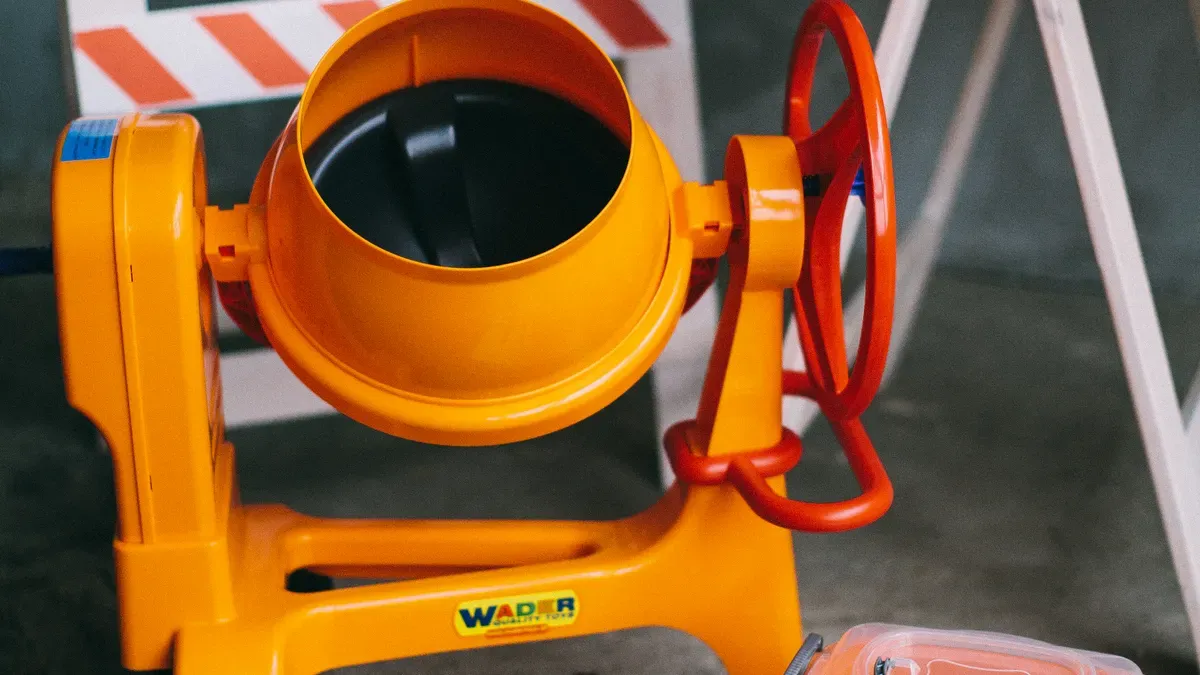
Innovative Features and Power Options
Your equipment selection narrows considerably when you examine what the CNWH tilting mixer brings to the job site. The rotating barrel with internal blades lifts, flips, and blends materials continuously. This design delivers consistent results every time, regardless of the concrete grade you need. The tilting mechanism allows rapid unloading, reducing physical strain and cutting cycle times significantly.
| Feature | Benefit for Your Operation |
|---|---|
| Automatic hopper | Saves time and labor during material loading |
| Compact dimensions | Fits tight spots on urban job sites |
| Advanced tilting mechanism | Enables easy pouring with less strain |
| Drum design innovations | Faster mixing, consistent concrete consistency |
The power options deserve careful attention during your concrete mixer selection. Diesel and gasoline models keep working on sites without steady electricity. Electric versions deliver high output where reliable power exists. This flexibility means your mixing equipment adapts to any project environment. The four capacity choices—350L, 400L, 500L, and 700L—cover everything from small residential footings to larger commercial slabs.
Durability stands as a core feature to look for in this machine. Users report it lasts longer than other brands and handles tough conditions without failure. The robust construction supports long hours of continuous operation. This performance directly affects your total cost of ownership, since fewer replacements mean better long-term value.
Global Reach and Customer Support
CNWH Machinery sells over 80,000 machines annually. More than 30,000 customers across 130 countries rely on this equipment. A team of 500+ professionals backs every purchase with technical expertise and responsive service.
This global footprint matters for your construction business. Replacement parts remain available across multiple regions. Support staff understand diverse site conditions and application requirements. The brand’s reputation for quality follows every machine, which strengthens resale value when you upgrade.
The tilting mixer’s proven track record makes it a reliable, cost-effective investment. Contractors who prioritize quality and performance consistently choose this equipment. Your mixer capacity needs align perfectly with the available options. Whether you need a mortar mixer for fine materials or a concrete mixer for standard pours, this line delivers.
The combination of innovative features, multiple power sources, and worldwide support positions this mixer as the practical choice for contractors who demand reliability. Your selection process ends with a machine built to perform across every project you undertake.
Your selection process requires three key decisions. First, choose the mixer type based on your project requirements and material. Second, match capacity and power source to your job requirements. Third, prioritize durability and total cost of ownership for long-term performance.
The CNWH tilting concrete mixer delivers quality concrete across every batch. Multiple power options adapt to any site condition. Its robust construction reduces your mixing equipment costs.
This buying guide has equipped you with practical knowledge. Apply it to your next construction project. Your construction projects demand reliability. Visit cnbuildmachinery.com to explore the tilting mixer models. Compare specifications. Request a quote. Choosing the right cement mixer starts with an informed decision. Your equipment selection determines your success.
FAQ
How Do I Determine the Right Mixer Capacity for My Projects?
Calculate your total concrete volume for the largest recurring job. Divide that number by your mixer’s batch yield. Add a 20-30 percent buffer for spillage and delays. The tilting mixer’s 350L to 700L options cover most contractor needs.
Which Power Source Works Best for Remote Job Sites?
Diesel-powered mixers operate independently of the electrical grid. Gasoline models offer similar mobility with higher horsepower. Electric versions suit urban locations with noise restrictions. Your site conditions determine the best choice for your mixing equipment.
What Maintenance Keeps My Mixer Performing Reliably?
Clean the drum and blades after every use. Lubricate bearings and pivot points daily. Inspect blades for wear and replace them before failure. Store the unit in a dry place. These steps protect your equipment investment and maintain consistent performance.
How Does the 90-Minute Placement Rule Affect My Batching?
You must place concrete within 90 minutes of mixing. Larger batch capacities reduce the number of cycles needed. This helps you stay within the time window. Plan your batches carefully to maintain concrete quality and meet project requirements.