
A concrete mixer is a machine that blends cement, aggregates, and water into a workable, consistent batch of concrete. That job used to require a crew armed with shovels and wheelbarrows; today, it takes just one person and the right equipment.
What Is a Concrete Mixer?
A concrete mixer blends dry ingredients (cement and aggregates, such as sand and gravel) with water and keeps them in motion until the mixture reaches a usable consistency. While many people call it a “cement mixer,” both terms refer to the same machine; since cement is just one component, “concrete mixer” is the more accurate name for the tool that blends the complete batch.
Constant motion is key. Concrete begins to set the moment water touches the cement, so the mixer keeps the materials agitated to prevent the mixture from hardening before it is poured.
Every mixer, from a hand-cranked drum to a full ready-mix truck, does three things:
- Combines the dry material and water into a workable mix.
- Blends the material evenly so there are no dry pockets.
- Holds a consistent output so the concrete you pour at the end of the batch matches the concrete you poured at the start.
The difference between a well-poured slab and one that is prone to cracking or mottling often comes down to that final point. Compared to hand-mixing, using a mixer that delivers concrete with consistent uniformity yields stronger, more predictable results.
A Short History of Concrete Mixers
Concrete is one of the oldest building materials in use, yet the machines used to mix it are a relatively recent development. Here is how the technology evolved from muscle power to modern equipment.
Mixing by Hand: The Original Method
Early builders mixed everything by hand. The Egyptians used mud, straw, and lime mortar to bind bricks together, while the Romans made extensive use of concrete—creating structures that remain standing to this day. The modern era began in 1824 when Joseph Aspdin patented Portland cement, a binder still used in the production of almost all concrete.
Hand-mixing worked, but it was slow, physically demanding, and difficult to keep consistent from one batch to the next.
The First Powered Mixers
Powered drum mixers emerged in the late 19th and early 20th centuries. These stationary machines, positioned at construction sites, tumbled the mixture within a rotating drum, replacing the shovel-and-hoe methods previously used for large-scale jobs.
While they represented a step forward in speed, the concrete still had to be transported from the mixer, which limited the distance and pace at which the crew could work.
The Transit Mixer Changes Everything

A major leap forward was the motorized transit mixer—a truck-mounted drum that kept the concrete rotating while in transit. Stephen Stepanian, widely regarded as the father of the ready-mixed concrete industry, designed a dump-truck-style mixer and applied for a patent around 1916. Patent examiners were slow to accept the concept, and his patent was not granted until 1933.
Once it caught on, the transit mixer created the ready-mixed concrete supply chain we still rely on today: concrete is batched at a plant, kept mixed by the truck during transport, and arrives at the job site ready for placement.
The Mid-Century Build-Out
By the 1940s, engine power and truck-frame construction had caught up with demand. Bigger, more capable trucks could haul larger loads of wet concrete to construction sites, and ready-mix became the standard for commercial work. That infrastructure was built for volume, which is exactly why it can be a poor fit for the smaller residential pours covered later in this guide.
Types of Concrete Mixers Today
Modern equipment gives you real options depending on batch size, access, and how much concrete you actually need. Here are the main types you will run into.
Drum Mixers (Transit and Portable)
Classic drum mixers remain in use in the commercial sector. On ready-mix trucks, a large motor rotates the drum, and internal blades keep the aggregate, water, and cement in motion so the load does not set during transport. Small trailers and electric drum units bring this same concept to a residential scale, although you still work in fixed batches and must empty the drum before processing the next one.
Volumetric Mixers
A volumetric mixer is a mobile batching plant. The truck features separate compartments for aggregates, cement, and water, with augers, pumps, and conveyors delivering materials on demand to a computer-controlled mixing zone. Because volumetric concrete mixers batch on-site rather than drawing from a central silo, contractors can dial in specific mix designs and pay only for the concrete they actually pour. This flexibility makes them popular for large-scale projects or jobs with demanding specifications.
Portable and Mobile Concrete Mixers
Portable concrete mixers bring mixing power directly to the point of placement. These compact machines are designed for jobs that ready-mix trucks cannot reach or that are too small to justify a full truckload—such as backyard slabs, fence lines, foundations, and repairs in remote locations. A good portable mixer allows a single person to load, mix, and pour concrete without having to wait for a delivery window or a minimum truckload order.
For DIYers and professional contractors working on residential jobs, this is where portable concrete equipment earns its keep.
Where Modern Mobile Mixers Solve Real Problems
Ready-mix concrete is designed for large-volume pours, which creates problems for smaller jobs. Scheduling a truck for a shed pad or post holes often entails paying “short-load” fees, working around tight delivery windows, and rushing once the concrete arrives. For jobs in remote areas or locations with restricted access, the truck might not even be able to reach the pour site.
Manual mixing can solve access issues but creates new problems: it is slow, labor-intensive, and difficult to maintain consistent output across dozens of bags. Portable mixers bridge this gap. They allow you to deliver a steady flow of mixed concrete—on your own schedule—exactly where it is needed, using only the materials actually consumed. This efficiency makes the difference between wasting a day on logistics and completing the pour before lunch. Reducing waste benefits both your budget and the sustainability goals increasingly demanded of your crew.
How the MudMixer Reinvented Small-Batch Mixing
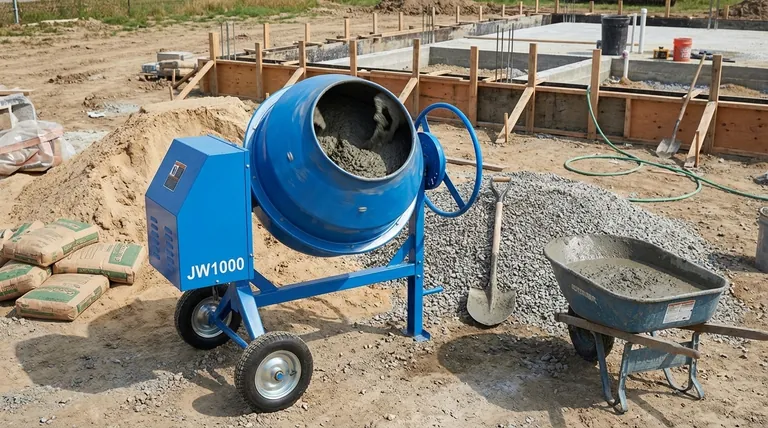
CNWHMixer is a portable, continuous mixer designed to eliminate two major headaches associated with small-scale jobs: waiting on ready-mix trucks and exhausting your crew with manual mixing. Instead of mixing in fixed batches, it utilizes a patented continuous mixing system powered by an electric drive. You simply load dry material into the hopper and adjust the water flow; a horizontal auger then mixes and discharges a steady stream of concrete, mortar, stucco, grout, or pool base material down the chute. It continues to mix and pour as long as you keep feeding the hopper.
That design changes the math on a residential job:
- Speed: Runs through 45 or more 80-pound bags of dry mix in an hour, letting one person mix roughly a cubic yard in that time.
- Consistency: The adjustable water dial holds your mix, so it is not too soupy or too dry, giving you a consistent output pour after pour.
- Less labor: Its hopper capacity of 120 pounds turns a 3-to-4-person job into a 1-person job and cuts filling wheelbarrow after wheelbarrow out of the process.
- Durability: A heavy-duty, high-strength steel body and two flat-free tires stand up to real job site conditions, backed by a 2-year warranty.
The people using it describe the same result. One fence installer reported running well over a thousand bags through his machine in a year and calls it his money maker. A homeowner set 25 fence posts with 3-foot-deep footings in under four hours by feeding the hopper and walking away between posts.