
If you want a great small cement mixer, look at cnbuildmachinery‘s Tilting Concrete Mixer. This mixer is special because it has a strong steel drum. It mixes well and is easy to use. When you choose a small cement mixer, think about your project size. Also, think about how often you will use it. People at home like small models that are easy to move. Professionals want mixers with strong motors and sturdy parts. Many customers like these mixers because they are easy to use and work well. They also give quick and even results.
Key Takeaways
- Pick a small cement mixer that fits your project size. Small jobs need mixers with 3 to 5 cubic feet. Big jobs need mixers with larger drums.
- Think about how often you will use the mixer. Homeowners should get lightweight models. Professionals need strong mixers with tough motors.
- Find a mixer with a powerful motor. A motor of ¾ HP or more mixes well. It works better for thick concrete.
- Choose the right power source. Electric mixers are quiet and cost less to use. Gas mixers give more power for hard jobs.
- Make sure the mixer is easy to move. Mixers with wheels and a small design are simple to carry and store. This saves you time and energy.
- Look at how well the mixer is made. Steel drums and strong frames last longer. They help the mixer survive rough work.
- Compare the price to the features. Mixers that cost more usually work better and last longer. They are a good investment.
- Take care of your mixer. Clean it often and check it regularly. This keeps it working well and helps it last longer.
Choosing the Right Small Cement Mixer
Capacity and Drum Size
Project Scale
Think about how big your project is before you pick a small cement mixer. If you are fixing something at home or doing a DIY job, a mixer with a small drum is enough. It does not take up much space and is simple to use. For bigger jobs, like making a patio or a small foundation, you need a mixer with a bigger drum. A larger drum lets you mix more concrete at one time. This helps you finish faster and means you do not have to mix as many batches.
Home vs. Professional Use
How you use the mixer is important too. If you are a homeowner or only use it sometimes, a small cement mixer that holds about 3 to 5 cubic feet is a good choice. It is light and easy to move. It also does not need much space. People who work with cement for their job need mixers with bigger drums and more space inside. They want machines that can work for a long time without getting too hot or breaking.
Motor Power
Mixing Efficiency
The motor is a big part of how well your mixer works. A strong motor mixes everything together so your concrete is always the same. For example, a motor that spins at 1500 RPM turns the drum about 3000 times in two minutes. This speed helps mix the concrete well. Mixers with motors that are about ¾ HP or more usually work better, especially when the concrete is thick or hard to mix.
Power Options
You can find small cement mixers that use different power sources. Here is a table that shows some common choices:
| Model | Power Source | Key Feature |
|---|---|---|
| Model A | Electric | Portable Design |
| Model B | Gas | Easy Clean |
| Model C | Electric | Tilt Feature |
| Model D | Gas | Durable Frame |
| Model E | Electric | Compact Size |
| Model F | Gas | High Capacity |
| Model G | Electric | User-Friendly Controls |
| Model H | Gas | Fast Mixing |
| Model I | Electric | Easy to Store |
| Model J | Gas | Robust Design |
Electric mixers are good for indoor use because they are quiet and do not make fumes. Gas mixers are stronger and can handle harder jobs, so they are better for outside or heavy work. If you want to spend less money to run your mixer, electric ones usually cost less. But gas mixers give you more power when you need it.
Portability
Weight and Wheels
It is important to move your mixer easily, especially if you work in different places. Pick a portable concrete mixer with wheels and a weight you can handle. This makes it easy to roll the mixer without hurting yourself. You save time and energy, so you can mix concrete instead of moving heavy things.
Compact Design
A small mixer fits in tight spots and is easy to store when you are not using it. If you do not have much space or work in small areas, a compact mixer is a smart pick. It is also easier to move, whether you put it in a truck or carry it in your yard.
| Feature | Benefit |
|---|---|
| Mobility | Saves time moving things and helps you work faster |
| Ease of transport | Makes it simple to go to different job sites |
| Self-loading | Loads and mixes by itself, so you do not have to do as much work |
Picking the right small cement mixer means you need to think about size, power, and how easy it is to move. Think about what you need for your project and how often you will use the mixer. This helps you get a mixer that works well and lasts a long time.
Build Quality
Materials
When you look at small cement mixers, you want to check the materials first. Good mixers use steel drums. Steel drums last longer and handle tough jobs. You also want a strong frame and quality wheels. These parts keep your mixer stable while you work. Heavy-duty bearings help the drum spin smoothly and reduce wear. Motor housing protects the motor from dust and rain, so your mixer keeps running even in bad weather.
Here’s a quick table to show what matters most:
| Material/Method | Description |
|---|---|
| Steel frames | Gives your mixer strength and helps it last longer. |
| Rust-resistant drums | Stops rust, so your mixer works well in all kinds of weather. |
| Heavy-duty motors | Makes mixing fast and reliable. |
| Quality mixing blades | Blends concrete evenly for a smooth mix. |
| Strong frame | Keeps your mixer steady while you pour and mix. |
| Protective motor housing | Shields the motor from dust and water. |
| Regular maintenance | Cleaning and checking parts keeps your mixer in top shape. |
Durability
Durability matters a lot. You want your small cement mixer to handle heavy use and tough conditions. Pick a mixer with a steel frame and rust-resistant drum. These mixers stand up to rain, heat, and rough handling. Well-designed mixing blades help you get a stable mix every time. If you clean your drum and check for loose parts often, your mixer will last even longer. You can trust a durable mixer to keep working, batch after batch.
Price and Value
Cost vs. Features
You might wonder how much you should spend on a small cement mixer. Price depends on the features you get. Mixers with strong motors, steel frames, and industrial drums cost more, but they last longer and work better. Electric mixers usually cost less to run and maintain. Gas mixers give you more power and are good for remote sites. Here’s a table to help you compare:
| Feature | Impact on Value | User Group Suitability |
|---|---|---|
| Motor Power | Better mixing and reliability; more power for pros. | Professionals needing steady performance |
| Construction Features | Heavy-gauge steel and strong drums boost durability. | Great for tough jobs |
| Electric vs. Gas | Electric saves money and is easy to maintain; gas is portable and powerful. | Urban contractors or remote site workers |
Warranty
Warranty is important when you buy small cement mixers. Most mixers come with a limited warranty, usually one to three years. A strong warranty shows the maker trusts their product. It also gives you peace of mind. Always check the warranty before you buy. Reading reviews helps you see how the mixer performs in real life. If you pick a mixer with a good warranty, you know you’re getting a reliable machine.
Tip: A longer warranty means the company stands behind its mixer. This can help you feel confident about your purchase.
Top Small Cement Mixer Models
cnbuildmachinery Tilting Concrete Mixer
Features
You get a lot of smart features with the cnbuildmachinery Tilting Concrete Mixer. The rotating mixing barrel lifts and flips materials, so your mix stays even every time. The tilting mechanism lets you unload concrete fast, which saves you time and effort. You can pick from diesel, gasoline, or electric power options. This mixer comes in four sizes: 350L, 400L, 500L, and 700L. The compact design makes it easy to move and store, even on busy job sites. The drum uses high-quality steel and strong internal blades. You can trust it to handle tough jobs and keep working day after day.
Advantages
This mixer stands out for its efficiency and reliability. You can mix and unload concrete quickly, which boosts your productivity. The strong steel construction means you don’t have to worry about damage or wear. You can use different power sources, so you’re ready for any work environment. The compact size helps you move the mixer around tight spaces. You get uniform mixing, so your small cement mixer concrete always meets your project’s standards. The tilting drum makes cleaning easy, and you spend less time on maintenance.
Tip: If you want the best small cement mixer for both home and professional use, this model gives you flexibility and long-lasting performance.
Use Cases
You can use the cnbuildmachinery Tilting Concrete Mixer for many types of projects. Homeowners like it for patios, driveways, and garden paths. Contractors use it for foundations, road repairs, and even large-scale infrastructure jobs. In places like Manila, this mixer helps crews work in narrow streets and crowded areas. In Indonesia, it handles tough climate conditions and strict concrete requirements. You can switch between different materials, like mortar and concrete, without losing quality. If you need a reliable mixer for small cement mixers or bigger jobs, this model fits your needs.
Kushlan 3.5 cu. ft. Mixer
Specs
You get a mixer that can handle up to six 60-pound bags of premixed concrete at once. The drum uses thick-walled polyurethane, so it resists dents and corrosion. Three steel blades mix concrete or mortar evenly. Flat-free tires make it easy to move across rough surfaces. The rounded frame gives steady support while you pour. Removable handles help you save space when you transport or store the mixer.
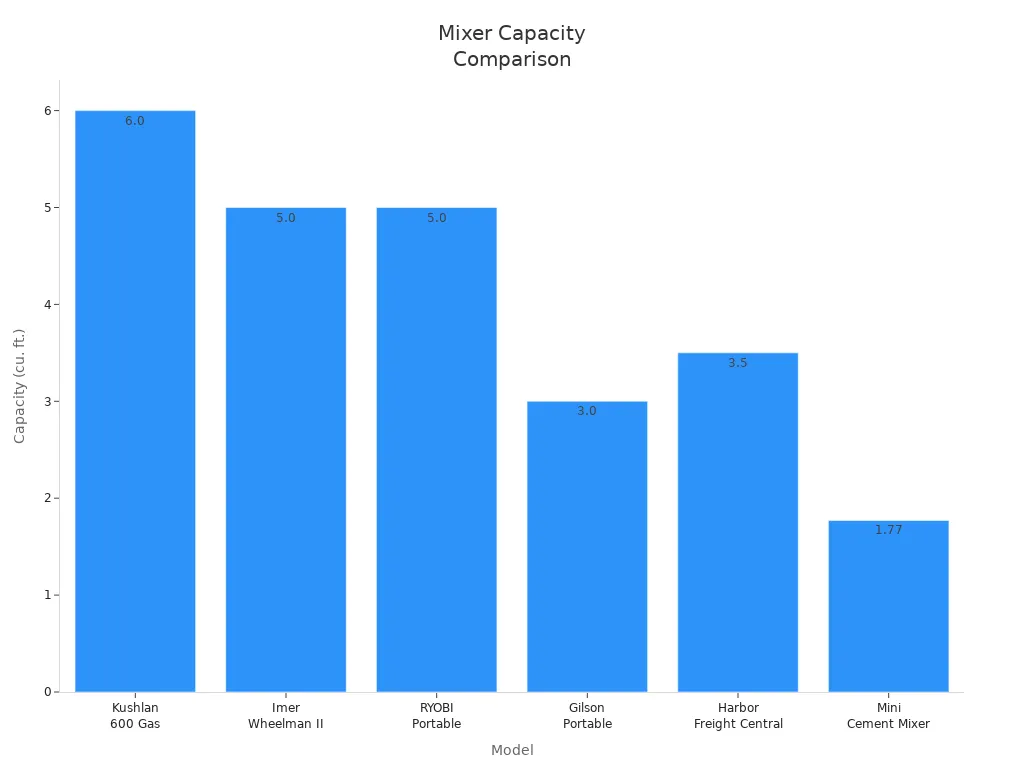
Here’s a quick comparison table with other popular models:
| Model | Capacity | Power Type | Batch Output | Key Features |
|---|---|---|---|---|
| Kushlan 600 Gas Mixer | 6.0 cu. ft. | Gas Engine | 280 lbs. max | Heavy-duty construction, professional grade |
| Imer Wheelman II | 5 cu. ft. | Gas Engine | 200 lbs. / 2 cu. ft. | Poly drum, portable design, fast mixing |
| RYOBI Portable Mixer | 5.0 cu. ft. | Electric | Residential capacity | Electric operation, consumer-friendly |
| Gilson Portable | 3 ft³ (85L) | Electric (115V) | Laboratory/testing | Rugged construction, portability focus |
| Harbor Freight Central | 3.5 cu. ft. | Electric | Budget-friendly | Affordable option, basic features |
| Mini Cement Mixer | 1.77 cu. ft. | Electric | Small projects | Ultra-portable, entry-level capacity |
Pros & Cons
Pros:
- You can mix up to six 60-pound bags at once, which is great for bigger batches.
- The three steel blades help you get a smooth mix for concrete or mortar.
- The drum is easy to clean and won’t dent or rust.
- Flat-free tires let you roll the mixer anywhere, even on rough ground.
- The rounded frame keeps the mixer steady while you pour.
- Removable handles make storage and transport simple.
Cons:
- You need to watch out for the power cord when you pour, so you don’t trip.
- The wide build may not fit in tight or narrow spaces.
Ryobi 5.0 cu. ft. Mixer
Specs
You get a mixer with a 5.0 cubic foot drum. The Ryobi mixer can handle two 90-pound bags of concrete, so it works well for small to medium jobs. The ½-horsepower direct drive motor gives you enough power for most DIY projects. You can plug it into a standard 120V outlet, which makes it easy to use at home or on site. The electric operation keeps things quiet and clean.
Pros & Cons
Pros:
- You can mix enough concrete for patios, walkways, and small foundations.
- The motor is strong enough for most home projects.
- The mixer is easy to use and doesn’t need special power.
- The electric design means you don’t deal with fumes or loud noise.
Cons:
- The motor may not be strong enough for big commercial jobs.
- The drum size is good for small cement mixer projects, but you might need more batches for larger work.
MudMixer
Specs
If you want a mixer that handles tough jobs, the MudMixer stands out. This machine is not just for regular concrete. You can use it for grouting and ground improvement, which means it works well for special construction tasks. The MudMixer uses a high-shear mixing system. This helps you get a smooth, even mix, even when you need to keep the water-to-cement ratio just right. That’s important for jobs like tunnel boring machine (TBM) backfilling or jet grouting.
Here’s a table to show how the MudMixer compares to standard small mixers:
| Specification Type | MudMixer Features | Standard Small Mixers Features |
|---|---|---|
| Design Purpose | Engineered for grouting and ground improvement | Suitable for lower-stakes applications |
| Water-to-Cement Ratio Precision | Requires precise ratios for high-density slurries | Less critical for standard mixing |
| Mixing Technology | Colloidal high-shear mixers for better slurry quality | Conventional paddle mixers |
| Performance | Produces lower bleed and improved pumpability | Acceptable results for basic mixing |
| Application Range | Suitable for TBM segment backfilling, jet grouting | General construction tasks |
You get a machine that’s built for more than just mixing concrete. The MudMixer helps you handle jobs where quality and precision matter.
Pros & Cons
Pros:
- You can use the MudMixer for special jobs, like grouting and backfilling.
- The high-shear mixing system gives you a smooth, pumpable mix.
- It keeps the water-to-cement ratio steady, so your mix stays strong.
- The design helps you finish tough jobs faster and with less mess.
Cons:
- The MudMixer costs more than most small mixers.
- You might not need all its features for simple home projects.
- It’s heavier and less compact, so moving it can be harder.
Tip: If you work on jobs that need perfect mixes and special materials, the MudMixer could save you time and give you better results.
Anvil Eggbeater Mixer
Specs
The Anvil Eggbeater Mixer looks simple, but it’s a favorite for many DIY fans. You use it with a standard drill. It’s great for mixing small batches of mortar, grout, or even paint. The mixer is lightweight and easy to clean. You can pick it up for a low price, so it’s a good choice if you only need to mix a little at a time.
Here’s a quick look at how it stacks up against other mixers:
| Product Name | Rating | Price |
|---|---|---|
| Anvil Eggbeater Mixer | 4.7/5 | $12.97 |
| MUDMIXER Continuous Feed Portable Electric Concrete Mixer | 4.6/5 | $2,999.00 |
| RYOBI 5.0 cu. ft. Portable Concrete Mixer | 4.5/5 | $349.00 |
You can see that the Anvil Eggbeater Mixer gets a high rating, even though it’s much cheaper than other options.
Pros & Cons
Pros:
- You can buy it for a very low price.
- It’s easy to use with any drill you have at home.
- Cleaning takes just a few minutes.
- It works well for small jobs and quick fixes.
Cons:
- You can’t use it for big batches of concrete.
- It needs a drill, so you need to have one ready.
- Mixing thick or heavy materials takes more effort.
Note: If you want a simple tool for small mixing jobs, the Anvil Eggbeater Mixer is a smart pick. It’s budget-friendly and easy to store.
Comparing Small Cement Mixers
When you look at small cement mixers, you want to see how they stack up in real life. Let’s break down the main things you should check: capacity and power, portability and build, and price and value. This way, you can pick the mixer that fits your needs best.
Capacity & Power
You’ll notice that drum size and motor power make a big difference in how much you can mix and how fast you get the job done. Here’s a quick table to help you compare:
| Model | Drum Capacity (cu ft) | Motor Power (HP) | Weight (lbs) | Power Source | Key Feature |
|---|---|---|---|---|---|
| Model A | 3.5 | 1.0 | 85 | Electric | Portable Design |
| Model B | 4.0 | 1.5 | 95 | Electric | Tilt Feature |
| Model C | 2.5 | 0.75 | 70 | Electric | Compact Size |
| Model D | 5.0 | 2.0 | 105 | Gas | High Capacity |
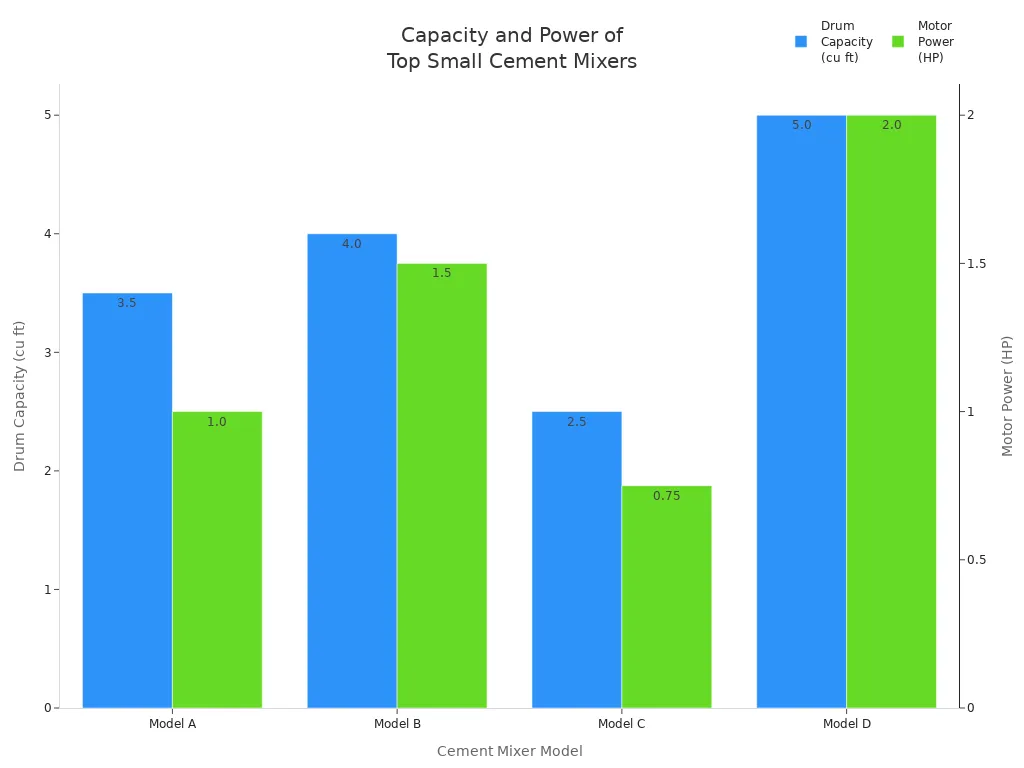
If you pick a mixer with a bigger drum and more motor power, you can mix larger batches and finish faster. Smaller mixers are easier to move but may need more mixing cycles for big jobs. Gas-powered mixers usually give you more power, which helps when you need to mix thick or heavy concrete.
Portability & Build
You want a mixer that’s easy to move and built to last. Here’s what you should look for:
- Wheels make it simple to roll your mixer from one spot to another.
- A compact design helps you fit the mixer in tight spaces or store it when you’re done.
- Steel frames and heavy-duty motors mean your mixer can handle tough jobs and last longer.
- Good build quality keeps your mixer running, so you don’t lose time on repairs.
Did you know? Over 30% of construction delays happen because of equipment failures. Picking a mixer with strong materials and a stable design helps you avoid these problems.
Price & Value
You want the best deal for your money. Mixers with bigger drums and stronger motors usually cost more, but they save you time and effort on big projects. Electric mixers are often cheaper to run and maintain, while gas mixers give you more power for outdoor or heavy-duty work.
Here’s a quick tip: If you only do small jobs, a mixer with a 1-2 cubic foot drum is enough. For bigger projects, go for a 4-5 cubic foot model. Always check the warranty and read reviews to see how the mixer holds up over time.
Choosing the right small cement mixers means looking at what matters most for your work. Think about how much you need to mix, how often you’ll move the mixer, and how much you want to spend. With the right info, you’ll find a mixer that makes your job easier and lasts for years.
Maintenance & Safety Tips
Taking care of your small cement mixer keeps it running smoothly and helps you avoid problems on the job. Let’s break down some simple steps you can follow to keep your mixer in top shape and stay safe while using it.
Cleaning & Care
You want your mixer to last, right? Start with good cleaning habits. After each use, rinse the drum with water and use a scrub brush to remove any leftover concrete. If you let concrete dry inside, it gets tough to remove and can throw off the balance when mixing concrete next time.
Here’s a quick checklist for cleaning and care:
- Clean the drum and blades with water after every use.
- Check for any leftover material and scrub it out before it hardens.
- Inspect belts and motors to make sure everything works well.
- Lubricate moving parts like bearings and drives every 40 hours of use.
- Store your mixer in a dry place to prevent rust.
Tip: A clean mixer works better and lasts longer. Don’t skip this step, even if you’re tired after a long day.
Safe Operation
Safety comes first when you’re working with machines. Before you start, look over your mixer to make sure it’s clean, stable, and undamaged. Always set it on level ground so it doesn’t tip over.
Follow these safety steps:
- Wear the right gear—gloves, safety glasses, a dust mask, and sturdy boots.
- Never put your hands or tools inside the drum while it’s spinning.
- Use proper tools to load and unload materials.
- Don’t overload the mixer. Stick to the manufacturer’s limits.
- Unplug or turn off the power before cleaning or making adjustments.
- Use a Ground Fault Circuit Interrupter (GFCI) for electric mixers.
- Keep the area around your mixer clear and clean up spills right away.
If you work with others, make sure everyone knows how to use the mixer safely. Training and supervision help prevent accidents.
Maximizing Lifespan
Want your mixer to keep working year after year? A few simple routines can make a big difference.
- Clean the drum and blades every day to stop concrete from hardening inside.
- Add materials in the right order to avoid clumping and reduce stress on the motor.
- Never fill the drum past its recommended capacity.
- Check belts, blades, and other parts for wear or damage.
- Lubricate all moving parts as the manual suggests.
- For gas or diesel mixers, check oil and fuel levels often. For electric models, look at battery terminals for corrosion.
Note: Regular inspections and care help you catch small issues before they turn into big problems.
By following these tips, you’ll get the best performance from your mixer and keep your job site safe. Good habits mean less downtime and more time getting work done.
Customer Stories & Real-World Applications
Manila Housing Project
Challenges
Picture working in Manila’s old city. The streets are narrow and crowded. Big trucks cannot get to the site. You must mix materials for walls and foundations. Old mixers break or mix unevenly. Walls crack and you spend more time fixing them. You need a mixer that fits small spaces and handles tough jobs.
Solution
You pick the cnbuildmachinery Tilting Concrete Mixer. You roll it easily through tight lanes. Its small size lets you work in tiny spots. You switch between concrete and mortar quickly. The steel drum and blades mix everything well. The tilting feature helps you unload fast. You do not waste time cleaning or moving heavy tools. The mixer keeps working, even in Manila’s hot weather.
The site manager said, “CNWH’s mixer saved us 35% in labor costs and finished the project two weeks early!”
Results
You see big changes right away. The mixer reaches every part of the site. You deliver materials fast and skip manual work. Your concrete quality gets better. Walls stop cracking. You pass inspections the first time. Maintenance costs go down. The mixer runs for four months without stopping. You finish early and save money. The team feels proud and the community gets new homes sooner.
Indonesia Infrastructure Success
Climate Challenges
You work on a highway in Indonesia. The weather is tropical. Rain comes fast and it gets hot. You need concrete with strict slump and uniformity. Regular mixers leave residue and slow things down. You worry about delays and contamination.
CNWH Solution
You use the CNWH Tilting Drum Concrete Mixer. The double-cone drum tilts forward for quick unloading. You mix low-slump and high-slump concrete easily. The blades mix everything in sixty seconds. The sealed system keeps rainwater out. You adjust moisture levels as you work. You follow local rules and keep the site clean.
The procurement manager in Jakarta said, “We can switch between dry-hard precast and fluid road concrete at the touch of a button.”
Project Outcomes
You see faster unloading times. Each batch empties in twelve seconds. Daily output goes up by 50%. Cleaning costs drop by 65%. Almost all concrete batches qualify. You do not stop to clean the drum. You finish the job on time and set a new quality standard. The CNWH mixer helps you handle tough weather and strict rules. You feel ready for the next big project.
| Project Location | Challenge | CNWH Mixer Benefit | Result |
|---|---|---|---|
| Manila | Narrow streets | Compact, mobile design | Faster completion, less labor |
| Indonesia | Tropical climate | Sealed, rapid discharge | Higher output, cleaner site |
Real-world stories show how picking the right mixer can change your project. You get better results, save money, and finish faster.
There are many small cement mixers you can pick from. To find the best one for your project, think about what you need and how much you can spend. It is important to get good quality and a fair price. The cnbuildmachinery Tilting Concrete Mixer works well and lasts a long time. You can use the tables and real-life stories to help you choose. This will make your next project quicker and simpler!
FAQ
How do I choose the right size mixer for my project?
Think about your project’s size. For small jobs, pick a mixer with a smaller drum. For bigger tasks, go for a larger drum. You’ll save time and mix more at once.
Can I use small cement mixers for both concrete and mortar?
Yes, you can. Just clean the drum well between uses. This keeps your mixes strong and prevents leftover material from causing problems.
What power options do these mixers have?
You’ll find electric, gasoline, and diesel options. Electric mixers work well indoors. Gasoline and diesel mixers give you more power for outdoor or heavy-duty jobs.
How do I clean my mixer after use?
Rinse the drum with water right after mixing. Use a brush to scrub off any leftover concrete. Don’t let concrete dry inside the drum.
Are small cement mixers easy to move?
Most models have wheels and a compact design. You can roll them around your yard or job site without much effort.
What safety tips should I follow when using a mixer?
Always wear gloves and safety glasses. Keep your hands out of the drum while it spins. Set the mixer on flat ground to keep it steady.
How long will a mixer last with good care?
With regular cleaning and simple checks, your mixer can last for years. Check parts often and fix small issues right away.
Can I use these mixers for home and professional work?
Yes! Many people use small cement mixers for home projects and professional jobs. They’re flexible and work well in many situations.